

In just 29 days on estradiol 0.1 mg/day, four patches (tE2) changed twice weekly, I experienced the following:
PSA: 762 → 77.44 ng/mL (89.8% drop)
Testosterone: 518 → 60 ng/dL (88.4% drop) - Just above the castrate level of 50
And with no side effects except for some mild nipple tenderness, which is alleviated by applying a small amount of topical diclofenac (Voltaren) gel daily. I did receive low-dose prophylactic radiation to my breast buds several days before starting the patches.
My radiation oncologist chose to treat each breast bud with 5 Gy once daily for three days, for a total of 15 Gy each. Some men who receive prophylactic radiation to help prevent gynecomastia still get breakthrough signs and symptoms, so it is not a panacea. But it worked well for me!
I am amazed at my response to just 29 days of tE2. The rapid and profound drop in my PSA and testosterone is eye-opening. Not only does it show that the cancer is still hormone-sensitive, but also how fast tE2 can work.
I’m happy to report that after my health insurance company received a letter of medical necessity from my radiation oncologist, my insurance is now paying for my estradiol patches.
I’m also very happy that my complete blood count (CBC) and comprehensive metabolic panel, including alkaline phosphatase (ALP), are normal despite some bony metastases.
I’m now six weeks into treatment with the patches. Unlike the luteinizing hormone-releasing hormone agonist, Trelstar, I tried in the summer of 2018, tE2 didn’t cause an initial spike in testosterone or the side effects of hot flashes, night sweats, fatigue, and secondary depressive symptoms.
I am ecstatic about the lack of side effects.
Men need estrogen
Most of us are taught that testosterone is a male hormone and that estrogen is a female hormone, but that’s not true. Both sexes require both hormones to function normally.
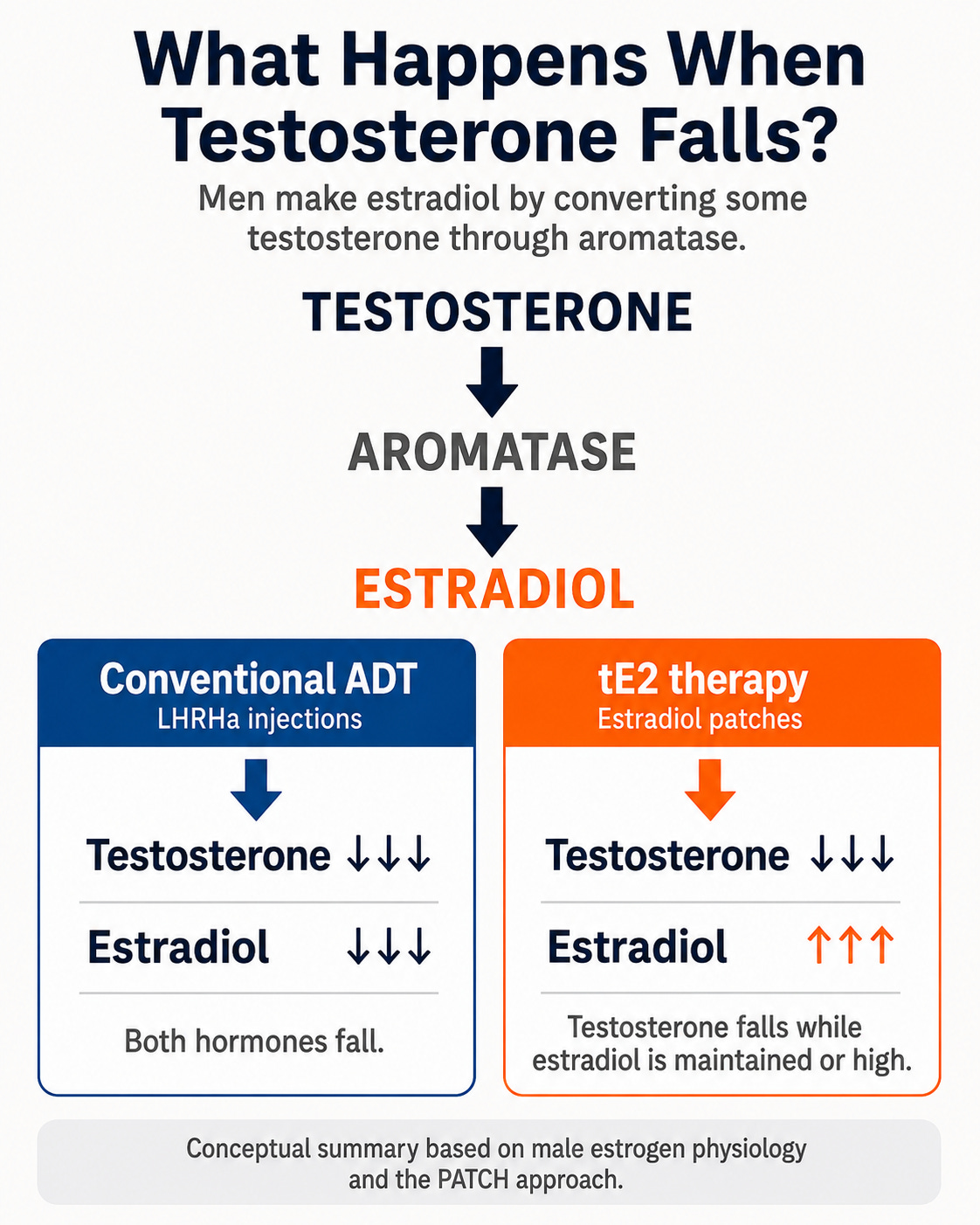
Men have two main forms of estrogen in their bodies: estrone (E1) and estradiol (E2). Estradiol (E2) is the most powerful and active form, and 80% comes from converting testosterone via the aromatase enzyme. (1)
The testicles produce 20% of circulating estrogen, while roughly 80% comes from outside the testes when testosterone is aromatized in fat, skin, bones, and the brain. (2)
In a population-based study of 452 men and 232 women, all 70 years old, the median estradiol level was 61.3 pmol/L in men and 18.4 pmol/L in women. (3) So, a 70-year-old man may have significantly more circulating estradiol than his postmenopausal 70-year-old wife.
The importance of estradiol in men
Estradiol is important in men for:
Bone maturation
Bone mineralization
Bone remodeling
Bone mass maintenance
Closure of growth plates in adolescent males
Cooke’s review describes why estradiol is so important for men’s bone health. It describes the association between low estradiol in men and the development of osteoporosis, accelerated bone loss, and fracture risk. (2)
A fascinating case study published in 1994 in the New England Journal of Medicine shows that estrogen is important for bone maturation and mineralization in men. (4) It describes a 28-year-old man referred to an orthopedic surgeon due to tall stature with unfused bone growth plates.
Further workup revealed his lumbar spine bone density was more than two standard deviations below the mean for 15-year-old boys (the patient’s bone age). His serum testosterone was normal, but his estradiol and estrone levels were high.
He was diagnosed with a homozygous estrogen receptor mutation that prevented estradiol and estrone from binding to his tissues’ estrogen receptors, resulting in unfused growth plates, markedly delayed bone maturation, and osteoporosis.
This observation shows that testosterone alone is not sufficient to promote skeletal maturation and maintain bone mass, and that estrogen plays a pivotal role in bone mineralization in males and females.
Estradiol helps regulate body fat in men
Finkelstein and colleagues studied 400 healthy men aged 20 to 50. (1) They treated all the men with goserelin (Zoladex), a luteinizing hormone-releasing hormone (LHRH) agonist, which shut down their production of testosterone and estradiol.
198 of these men then received varying doses of testosterone gel or a placebo gel. The other 202 men received either varying doses of testosterone gel or a placebo gel plus anastrozole.
Anastrozole is a drug commonly used in men on testosterone replacement therapy for the prevention of gynecomastia by suppressing the conversion of testosterone into estradiol. Anastrozole blocks the aromatase enzyme I mentioned earlier.
This study design allowed researchers to separate the effects of losing testosterone from the effects of losing estradiol in men and found the following:
Testosterone deficiency primarily caused the loss of lean muscle mass, muscle size, and strength.
Estradiol deficiency primarily caused increased body fat.
Sexual function in men is not controlled by testosterone alone
In the Finkelstein study, both testosterone and estradiol deficiency contributed to declining sexual desire and erectile dysfunction. (1) In addition, a review by Schulster and colleagues discusses the role of estradiol in male sexual desire, erectile function, and reproductive function. (5)
In other words, normal male sexual function appears to depend on an interaction between testosterone and estradiol, not testosterone alone.
This distinction becomes more relevant later in this article when I compare quality-of-life results for men with prostate cancer treated with transdermal estradiol (tE2) versus a luteinizing hormone-releasing hormone (LHRH) agonist.
Estradiol’s importance for the male reproductive tract
The ducts leaving the testes have to remove large quantities of fluid before sperm enter the epididymis. Studies in mammals show that these ducts can reabsorb about 90% to 96% of that fluid, concentrating the sperm and providing an optimal environment for sperm maturation. (2)
When estrogen receptor-alpha (ESR1) is blocked or becomes nonfunctional, fluid reabsorption is impaired, causing severe dilation of these ducts, misshapen sperm, and decreased sperm motility. Genetic abnormalities in the human ESR1 gene are associated with the absence of sperm and male infertility. (2)
Hot flashes are largely due to the absence of estradiol
This fact is especially important for men on androgen deprivation therapy (ADT) since ADT causes suppression of both testosterone and estradiol.
Taylor and colleagues performed a secondary analysis of the same 400 healthy men studied by Finkelstein and colleagues. All 400 had their natural testosterone production suppressed with goserelin (Zoladex) and were randomized to different doses of testosterone gel.
Approximately half also received anastrozole to block the conversion of testosterone to estradiol. This let researchers examine whether hot flashes are mostly caused by testosterone deficiency or estradiol deficiency. (1,6)
This secondary analysis, published in 2016, showed that estradiol deficiency is the key driver of vasomotor symptoms (hot flashes) in men whose testosterone is suppressed by ADT. (6)
Researchers and some physicians have known, at least since 2016, that hot flashes caused by ADT aren’t simply a side effect of testosterone suppression, but mainly because estradiol is also suppressed.
This fact is reflected later in this article when I discuss the enormous difference in hot flashes between men treated for prostate cancer with transdermal estradiol (tE2) patches versus ADT.
Conventional ADT causes two hormone deficiencies
Conventional LHRH agonists (Lupron, Eligard, Zoladex, Trelstar) suppress testicular testosterone production. But because testosterone is the precursor for most estradiol in men’s bodies, estradiol is also suppressed.
A 2024 review by Coelingh Bennink and colleagues reports that conventional ADT in prostate cancer patients can suppress estradiol by more than 80%. (7)
Conventional ADT creates testosterone and estradiol deficiency along with various side effects. Keep in mind that testosterone and estradiol interact, and some effects cannot be strictly assigned to one hormone. (1,6,7)
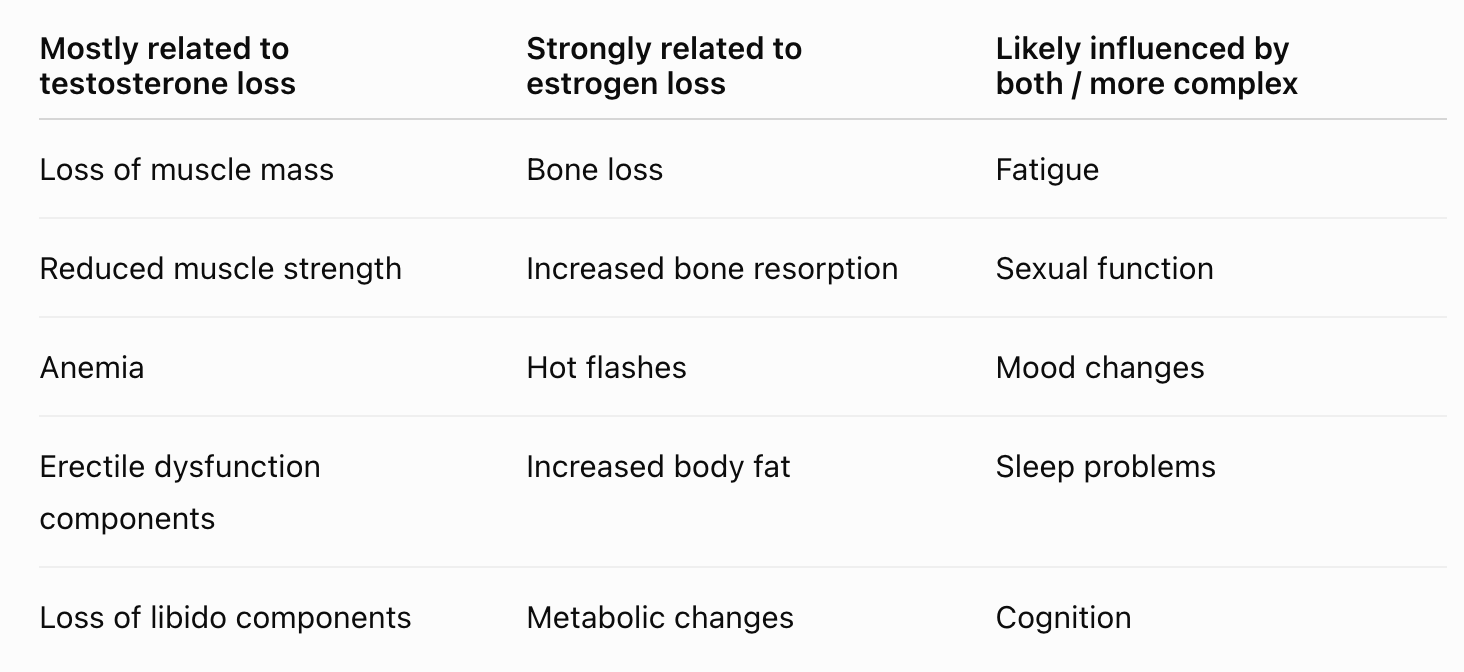
Suppressing testosterone is the therapeutic goal of ADT, but concomitant suppression of estradiol creates significant collateral damage.
What if we could suppress testosterone without eliminating estradiol?
High estradiol levels suppress testosterone by causing negative feedback at the hypothalamus and pituitary. This reduces luteinizing hormone (LH) and follicle-stimulating hormone, which in turn shuts down testicular testosterone production.
The PATCH trials
Can transdermal estradiol be successfully used in place of conventional ADT?
To investigate this and other questions, researchers began recruiting in the United Kingdom in 2006 for the PATCH (Prostate Adenocarcinoma: TransCutaneous Hormones) trial. This randomized open-label controlled trial compares transdermal estradiol (tE2) patches with standard LHRH-agonist therapy in men with either locally advanced or metastatic prostate cancer. (8)
Early data showed that estradiol patches suppress testosterone. At six months, the proportion of men who reached castrate levels of testosterone (50 ng/dL or lower) was:
Estradiol patches: 92.2%
LHRH agonists: 89.8% (9)
A later phase 3 analysis showed that of the men who remained on treatment, 85% in each group maintained testosterone at castrate levels throughout the entire first year. (10)
This is important because early results showed that patches could get testosterone down about as reliably as conventional ADT, and later results showed it could be suppressed over time.
The estradiol patch regimen
In the PATCH trials, men began treatment with four 0.1 mg/day estradiol patches, changed twice weekly. Once testosterone reached castrate level, dosing was generally reduced to three patches changed twice weekly. (8,9)
The estradiol patch wasn’t added to ADT. It is the ADT.
Oral estrogens and prostate cancer
But before we dig into the PATCH trials, I’d like to provide a historical perspective of how oral estrogens used to be the primary systemic treatment for prostate cancer.
In 1941, when Dr. Charles Huggins showed that androgens drive prostate cancer, he also discovered that administering estrogen could suppress its growth. From the 1940s to the 1980s, oral conjugated equine estrogens (think Premarin) and oral diethylstilbestrol (DES), a synthetic estrogen, were the primary systemic therapy for advanced prostate cancer. (11)
Because oral estrogen must first be metabolized by the liver (first-pass metabolism), it causes the excessive formation of clotting factors in the liver and downregulation of natural anticoagulants. This results in an increased risk of thromboembolic and cardiovascular complications. (10) These may include deep vein thrombosis, pulmonary embolism, myocardial infarctions, and ischemic strokes.
In addition, oral estrogens may cause sodium retention and congestive heart failure, particularly in elderly patients with preexisting cardiovascular conditions.
Despite this, the use of DES for prostate cancer continued because, at the time, the only other treatment to lower androgens was surgical castration. It turns out that a lot of men didn’t want their testicles removed.
So, physicians settled for excessive thromboembolic and ischemic events with DES therapy because, as I’ve said before in this Substack, “desperate times call for desperate measures.”
Then, in 1984, a head-to-head clinical trial comparing DES and leuprolide acetate (Lupron) was published, showing that leuprolide was equivalent to 3 mg of DES in reducing testosterone to castrate levels, but with far fewer cardiovascular issues. This led to the first LHRH agonist, Lupron, being granted FDA approval in 1985 for treating prostate cancer. (12,13)
With the approval of Lupron and other LHRH agonists and antagonists came the side effects of hot flashes, bone loss, and metabolic syndrome.
This is where transdermal estradiol (tE2) comes in. Not only do you have reduced risk for thrombotic events because you avoid first-pass metabolism, but you also have reduced risk for hot flashes, bone loss, and metabolic syndrome associated with conventional ADT.
Another interesting finding about both DES and tE2 is that they can reduce PSA levels in men whose prostate cancer has progressed despite castrate testosterone levels. (14,15)
This ability to produce new PSA responses in castration-resistant prostate cancer suggests that the antitumor activity of DES and tE2 cannot be explained solely by suppression of testicular testosterone.
In contrast, LHRH agonists and antagonists are mainly used to maintain castrate testosterone levels once castration resistance develops, and not as a treatment expected to produce new PSA responses.
How PATCH and STAMPEDE are connected
PATCH is the dedicated transdermal estradiol research program responsible for the published PATCH study results.
STAMPEDE stands for Systemic Therapy in Advancing or Metastatic Prostate Cancer: Evaluation of Drug Efficacy. It is a multi-arm, multistage platform trial to test new treatments combined with standard hormone therapy for men with high-risk or advanced prostate cancer.
STAMPEDE began in 2005 and ended recruitment in 2023. Almost 12,000 men from the UK and Switzerland have joined STAMPEDE. (8,16) Some of STAMPEDE’s findings include that adding drugs like abiraterone or docetaxel early to standard hormone therapy significantly extends patient survival.
How PATCH evolved into two phase 3 studies
PATCH began recruiting in the United Kingdom in 2006 as a randomized phase 2 study comparing transdermal estradiol patches with conventional LHRH-agonist therapy in men with both locally advanced (M0) and metastatic (M1) prostate cancer.
The first phase 2 study focused primarily on cardiovascular safety. Recruitment was then expanded to allow a larger phase 2 efficacy evaluation of the patches. (8) After success with the phase 2 studies, investigators expanded the program into a phase 3 study.
In 2017, investigators then began recruiting additional men through the larger STAMPEDE clinical-trial platform. (8)
At first, men with M0 and M1 disease were studied as one population. But over the many years the trial ran, treatment protocols for these two groups became increasingly different. Investigators therefore separated the program into two independently powered phase 3 studies. (8)
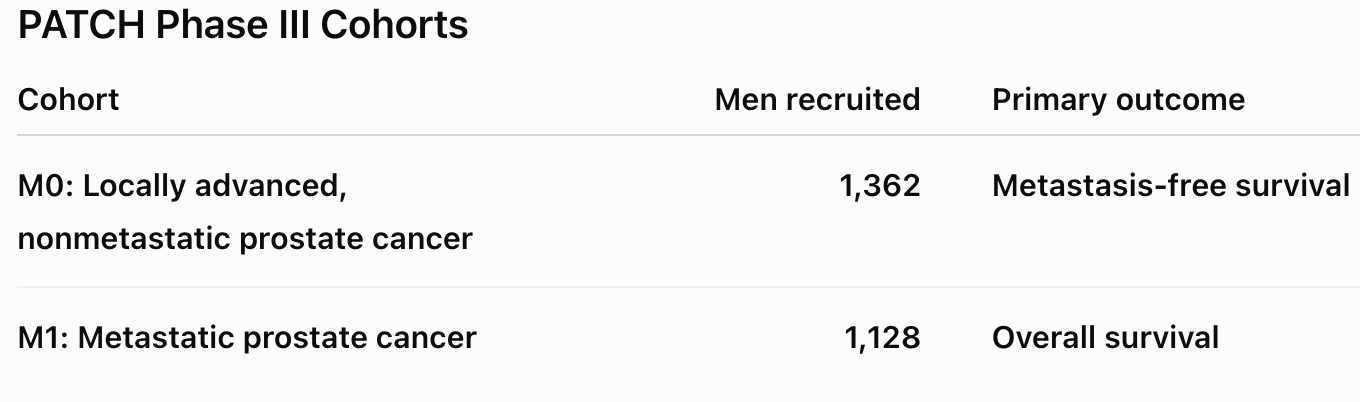
Investigators reported the PATCH M0 study results in the New England Journal of Medicine in 2026. (10) Recruitment for the PATCH M1 study ended in 2023, but the results are still pending, which will include a primary outcome of overall survival in men with metastatic disease. (8)
Because the M1 study ran for so many years, it also had to adapt as treatment for metastatic castration-sensitive prostate cancer changed.
When PATCH began, the randomized treatments were essentially tE2 versus LHRH-agonist therapy as ADT. Later, as docetaxel and the androgen receptor pathway inhibitors abiraterone, enzalutamide, and apalutamide became part of standard treatment, these therapies were permitted in either randomized arm.
Despite changing treatment protocols over the years, the central question remained the same:
Can tE2 replace an LHRH agonist as the ADT backbone without compromising overall survival?
The recently published PATCH phase 3 M0 study
In April 2026, PATCH investigators published the results of the first of these two phase 3 studies in the New England Journal of Medicine, and the results are impressive. (10)
The study included 1,360 men with locally advanced, nonmetastatic prostate cancer treated at 75 centers in the United Kingdom. Men were randomized to receive either transdermal estradiol patches or standard LHRH-agonist therapy as their ADT. (10)
Did the patches control the cancer?
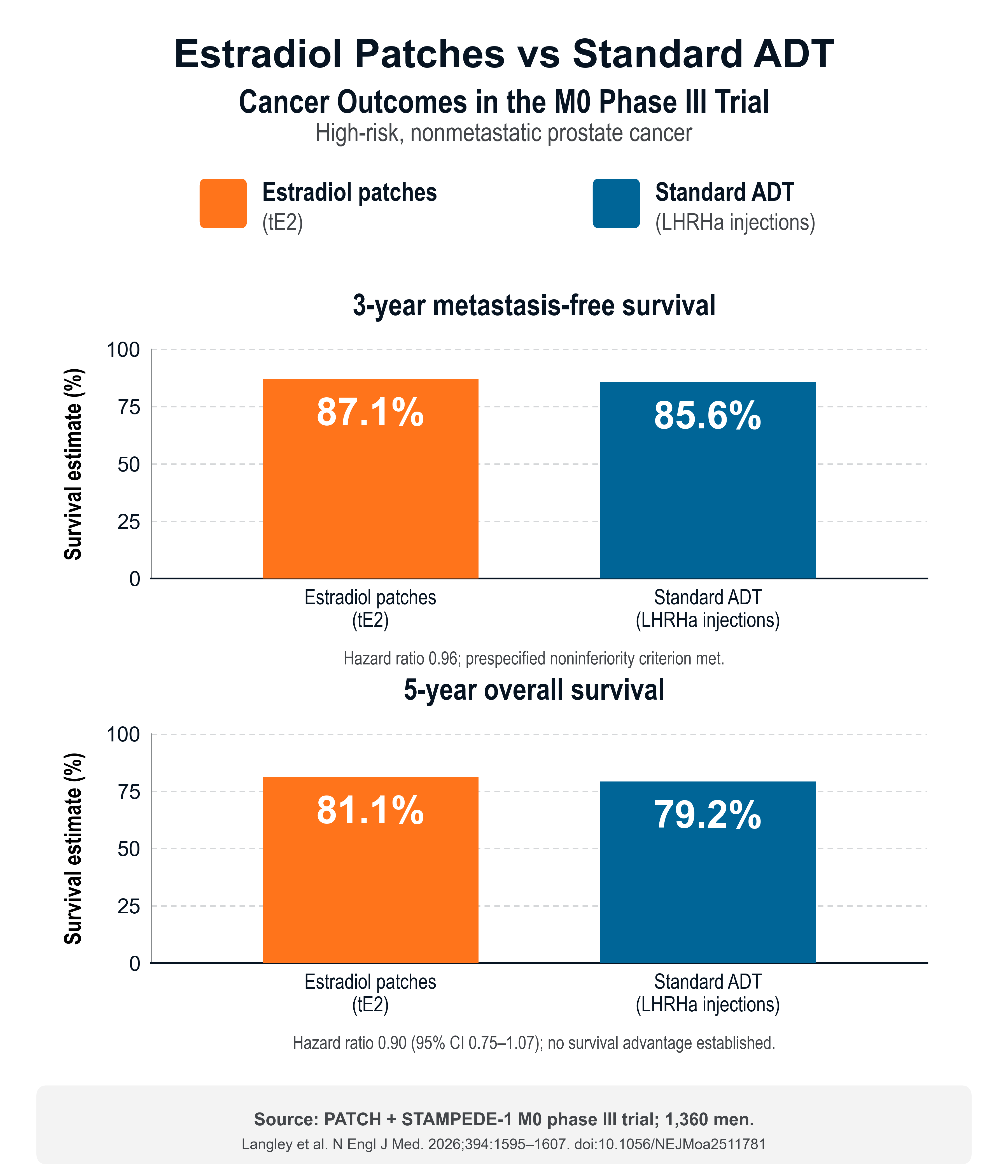
At three years, the percentage of men who were alive without their cancer spreading was nearly identical.
3-year metastasis-free survival (MFS):
Estradiol patches (tE2) 87.1%
Standard ADT (LHRHa) 85.9%
The trial was designed to determine whether estradiol patches were no less effective than, or noninferior to, standard ADT by a predefined margin. And the answer is yes. (10)
What about overall survival?
Five years after entering the trial, or 5-year overall survival (OS):
Estradiol patches (tE2) 81.1%
Standard ADT (LHRHa) 79.2%
In other words, cancer control and survival were very similar in both arms of the trial. (10)
For those interested in the statistics, the hazard ratio for metastasis or death was 0.96, meeting the trial criterion for noninferiority. The hazard ratio for overall mortality was 0.90 (95% CI, 0.75–1.07).
Now let’s look at how the two treatment arms compare in terms of quality of life, hot flashes, bone density, metabolic control, cardiovascular safety, and gynecomastia.
The following results come from the published trial results, quality-of-life (QoL) surveys, and substudies within the PATCH trial.
Hot flashes
This section is very important to me because the main reason I couldn’t tolerate treatment with an LHRH-agonist in the summer of 2018 was due to hot flashes and sweating, which mainly occurred at night. This resulted in severe sleep deprivation, leading to severe depressive symptoms.
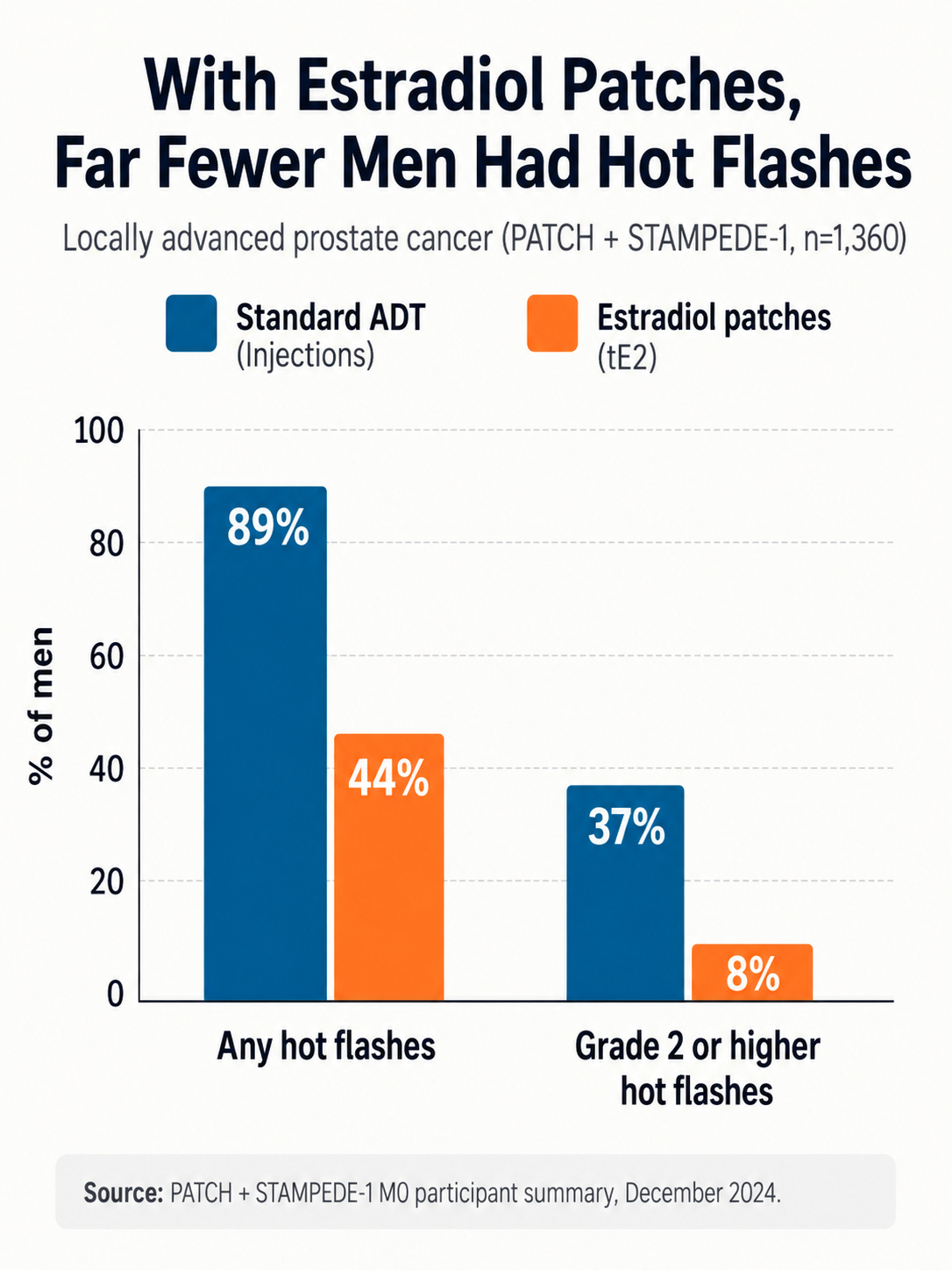
The PATCH M0 phase 3 study found:
Any hot flashes:
LHRHa: 89%
tE2: 44%
Grade 2 or worse hot flashes:
LHRHa: 37%
tE2: 8%. (10)
In the earlier PATCH quality of life study, at six months, men reporting “quite a bit” or “very much” hot flushing:
LHRHa: 46%
tE2: 8% (9)
One of the most interesting findings from the PATCH quality-of-life study was that the difference in fatigue between the two treatments appeared to be largely explained by the much higher rate of hot flashes with conventional ADT.
In other words, fatigue may not be caused solely by lowering testosterone itself. The PATCH data showed that men with more severe hot flashes were also more likely to have trouble sleeping, suggesting that hot flashes and the sleep disruption they cause may contribute substantially to the fatigue experienced with conventional ADT. (9)
So, for some men who choose tE2 patches as their backbone ADT, reducing hot flashes may also help protect their sleep and daytime energy.
Bone density
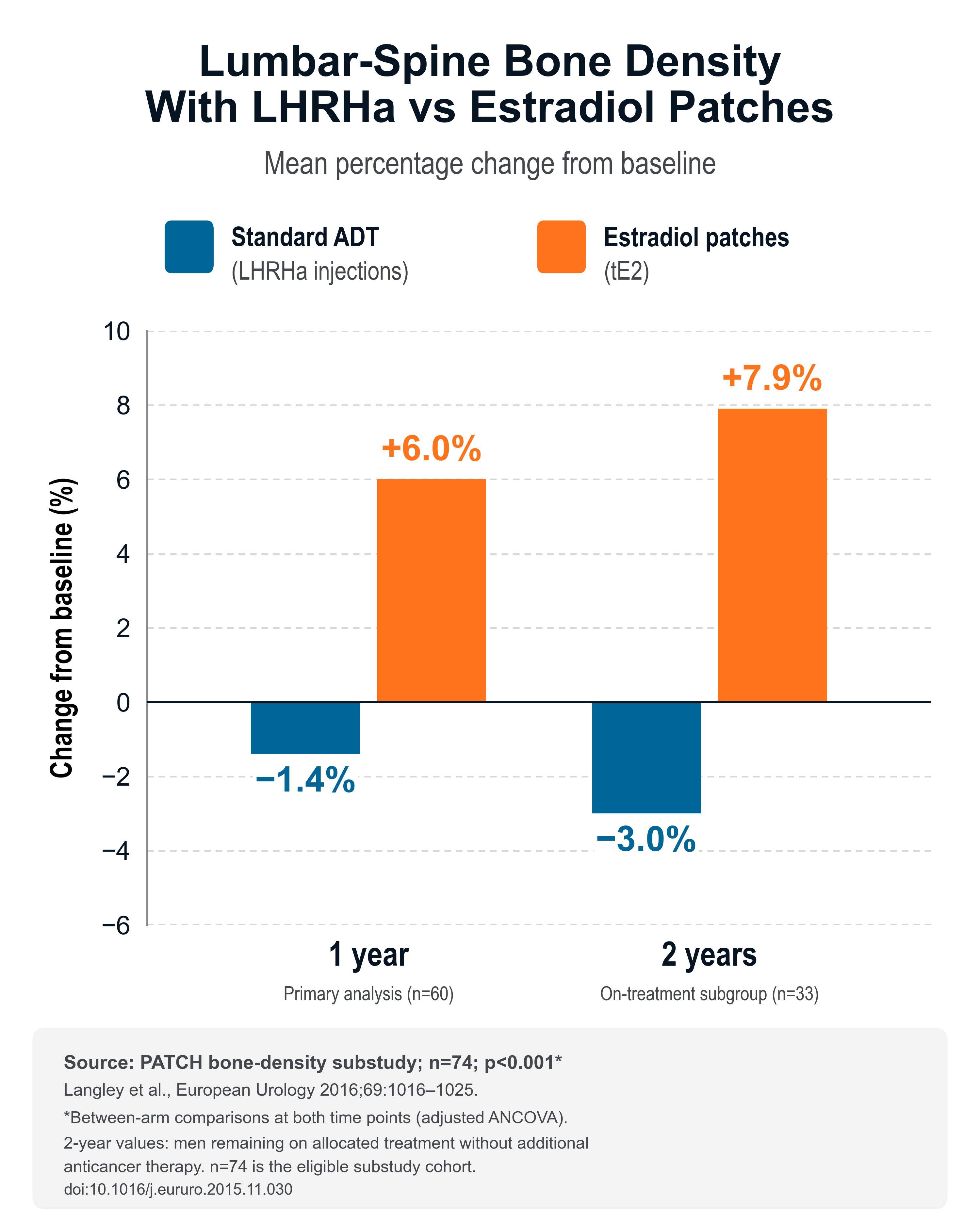
A randomized PATCH bone mineral density substudy included 74 men. (17) It showed that men receiving LHRH agonist injections lost lumbar spine bone density, while men receiving tE2 patches gained it.
This isn’t surprising since we’ve already established that estradiol in men is important for bone mineralization, remodeling, and maintenance.
Fracture rates
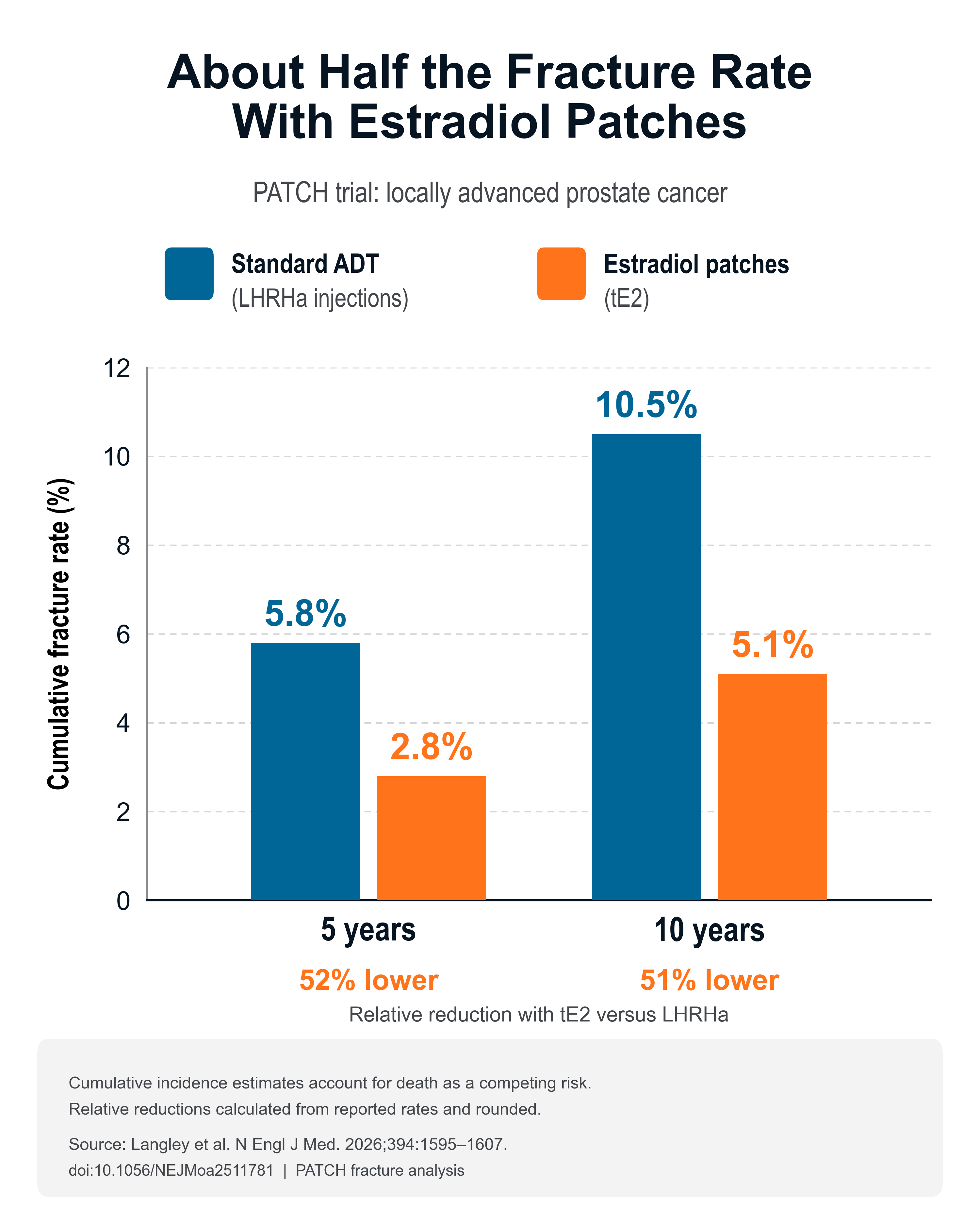
The fracture data impress me more than the bone density numbers do. A density score is a lab value. A broken hip is what lands a man in the hospital.
At 5 and 10 years, men on tE2 patches had about half the fracture rate of men on LHRH agonist injections. (10) Those are fractures at any site, not hip fractures alone.
Something most people don’t know is that when a man does break his hip, he does worse than a woman does. (33) In a study of 1,105 patients averaging about 83 years of age, men had roughly twice the odds of dying in the hospital, even after adjusting for their other medical problems. (34)
Glucose and cholesterol
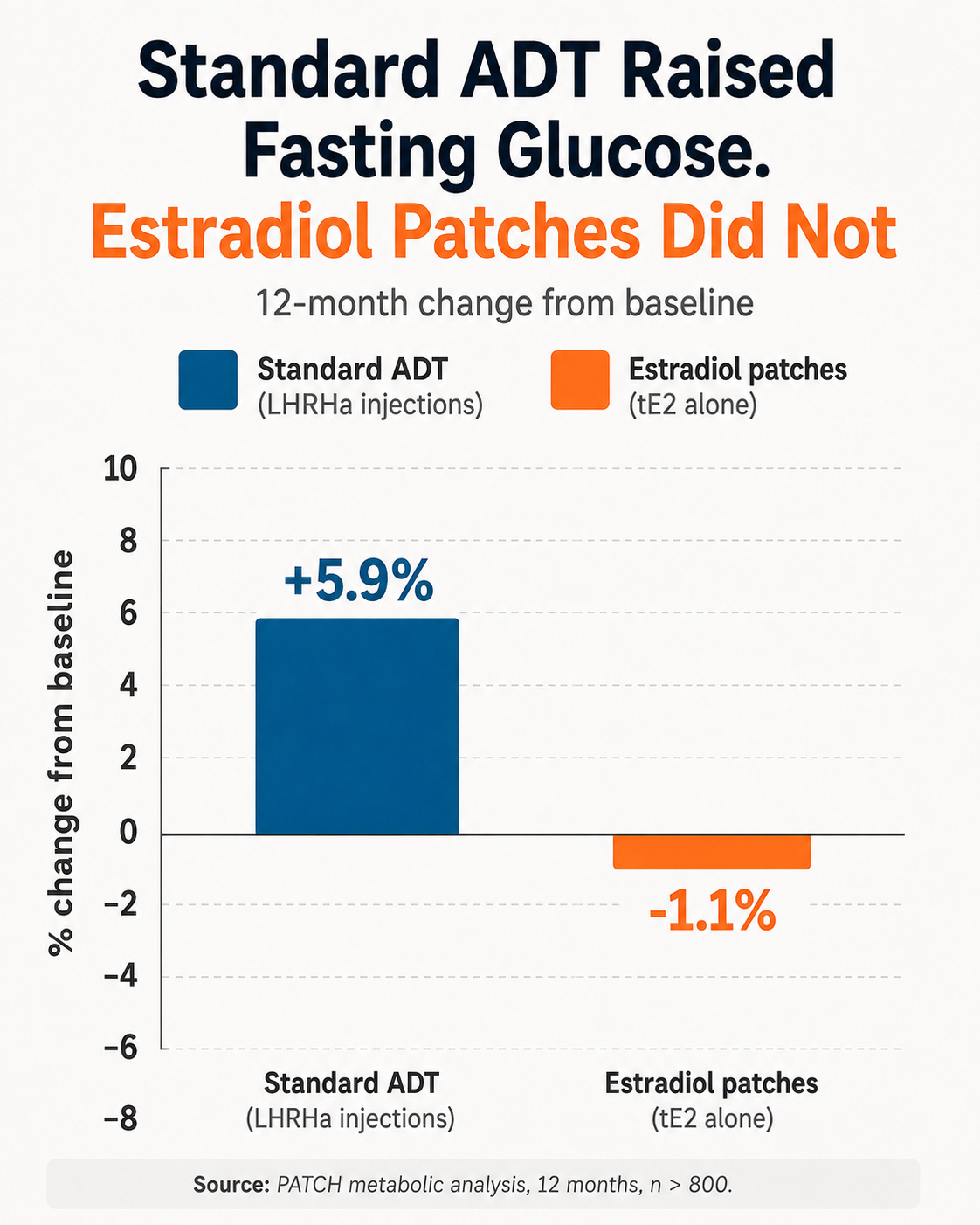
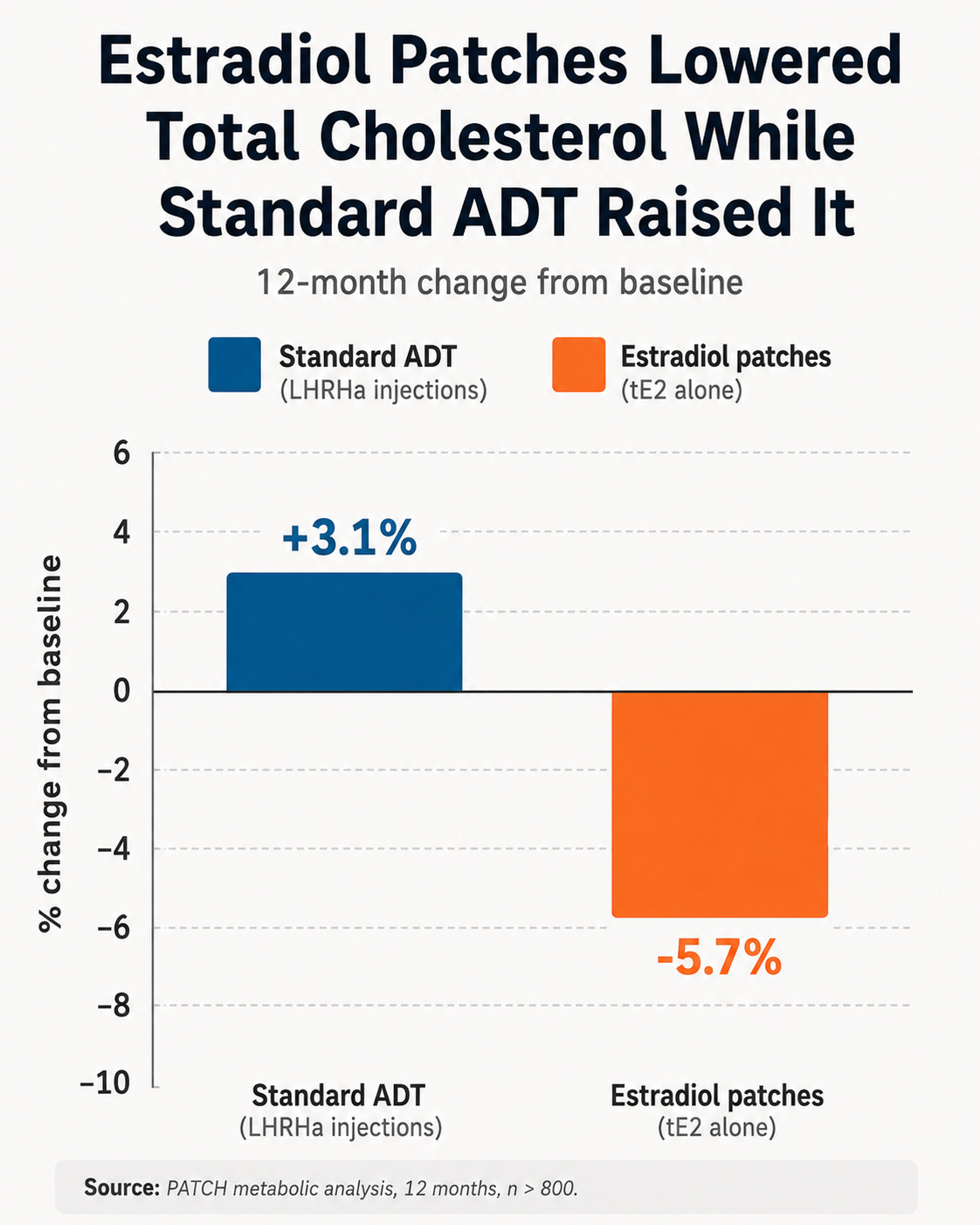
A 12-month analysis of over 800 men in the PATCH M0 study showed that fasting glucose and cholesterol increased in those on LHRH agonist injections and decreased in those on tE2 patches. These findings are statistically significant. (8)
Cardiovascular safety
The reputation of oral estrogens causing excessive thromboembolic and cardiovascular events when treating prostate cancer makes this analysis especially important.
The long-term PATCH safety analysis included 1,694 men and showed that men on tE2 patches did not experience an excess of cardiovascular events compared to men receiving LHRH agonist injections. (18)
Gynecomastia and breast tenderness
tE2 patches are not without side effects, and the clearest evidence in the PATCH M0 study is that men on tE2 patches experienced about twice the incidence of breast enlargement and tenderness than men receiving LHRH agonist injections.
Here is the breakdown of gynecomastia in both treatment arms:
Transdermal Estradiol (tE2) (693 men):
None (Grade 0): 15%
Grade 1: 47%
Grade 2: 33%
Grade 3–4: 5%
(Overall incidence: 85%; Grade 2 or higher: 37%)
LHRH Agonist (612 men):
None (Grade 0): 58%
Grade 1: 33%
Grade 2: 8%
Grade 3–4: 1%
(Overall incidence: 42%; Grade 2 or higher: 9%)
The study permitted only an 8Gy single-fraction prophylactic irradiation of the breast area to prevent gynecomastia. This appears to be a relatively low dose, especially if you consider that I underwent three days in a row of breast irradiation, 5 Gy each day for a total of 15 Gy per breast.
However, only 8% (46 out of 576) of men randomized to tE2 patches received prophylactic breast irradiation.
A subanalysis of men treated with tE2 patches compared outcomes between those who received the single 8 Gy fraction of prophylactic irradiation and those who did not. It showed virtually identical rates of breast swelling and tenderness.
With prophylactic irradiation (46 men): 58% had Grade 0–1 gynecomastia and 42% developed Grade 2–3 gynecomastia.
Without prophylactic irradiation (530 men): 59% had Grade 0–1 gynecomastia and 41% developed Grade 2–3 gynecomastia.
This isn’t surprising to me given the relatively low dose of irradiation used, and the study authors concluded that the single 8 Gy fraction of prophylactic irradiation did not effectively prevent or reduce breast enlargement in this trial. (10)
There is some discussion in the medical literature and in online forums that some men on tE2 patches take tamoxifen to prevent gynecomastia. This drug is a selective estrogen receptor modulator and is used to treat breast cancer in both men and women.
I wouldn’t recommend taking tamoxifen because a common side effect is hot flashes, along with a long list of other potential side effects. I can only speak from experience and say I’m very happy with the outcome from prophylactic irradiation.
The Estradiol Initiative
The Estradiol Initiative (EI) is an organization whose mission is “to educate patients and clinicians about the benefits and risks of using transdermal estradiol (tE2) for men receiving Androgen Deprivation Therapy (ADT) for prostate cancer.” Their main goal is to secure FDA and NCCN approval for tE2 ADT as a Standard of Care for these patients. (19)
Richard Wassersug, PhD, is on the research team of the EI and is a prostate cancer survivor being treated with transdermal estradiol. Dr. Wassersug reviewed the medical literature regarding trans women on tE2 and found “a majority of trans women in the studies we discuss below had less than an A-cup size, and closer to an AA-cup size, after more than 12 months of estradiol treatment.” (20)
Paul Schellhammer, MD, a urologist and past president of the American Urological Association, is a member of the EI’s research team and also a prostate cancer survivor who has been on tE2 for approximately 18 years. In a very interesting YouTube video, Dr. Schellhammer reports that he underwent a minor procedure called a neurectomy of the anterior branch of the T4 nerve to resolve his breast discomfort successfully. (21)
FDA and NCCN approval
The Estradiol Initiative makes an important point about securing U.S. Food and Drug Administration (FDA) and National Comprehensive Cancer Network (NCCN) approval for transdermal estradiol to treat prostate cancer.
Without those approvals, tE2 will have to continue to be used off-label, and men with prostate cancer may have a tough time finding doctors like mine who are willing to prescribe it. This is despite solid phase 3 clinical data that show its safety and efficacy in treating locally advanced castration-sensitive prostate cancer.
And that’s because of how it usually works here in the U.S.:
Successful industry-sponsored pivotal trial
↓
FDA approval for a specific indication
↓
Incorporation into NCCN clinical guidelines/Drugs & Biologics Compendium
↓
Medicare and commercial insurance coverage
↓
Practitioners widely adopt the therapy as a standard of care
A 2026 analysis of 83 new FDA oncology indications found that the NCCN incorporated them extremely quickly, with a median of only 19 days after FDA approval. However, the NCCN also added or modified 22.3% of indications before FDA approval, showing that FDA approval is not technically required. (22)
The FDA has already approved transdermal estradiol as a drug for menopausal indications, hypoestrogenism, and osteoporosis, but not prostate cancer. The FDA also recognizes that an already-approved drug may be legally prescribed off-label for a different disease, patient population, dose, or regimen. (23,24)
In addition, the Centers for Medicare & Medicaid Services (CMS) recognizes the NCCN Drugs & Biologics Compendium as an authoritative source for determining medically accepted off-label anticancer indications. CMS states that NCCN “Recommended” uses can therefore qualify as medically accepted indications for Medicare coverage even when the use is not FDA-approved. (25)
We do have a precedent for a drug being recommended by NCCN guidelines for treating prostate cancer without ever having obtained FDA approval for that condition. Ketoconazole (Nizoral) was FDA-approved in 1981 as an antifungal treatment, but has never been FDA-approved to treat prostate cancer. (26)
Following non-randomized phase 2 trials, ketoconazole was added to the NCCN prostate cancer guidelines in 1997 for salvage therapy in late-stage prostate cancer. (26)
Ketoconazole was never FDA-approved for prostate cancer, was added to the NCCN guidelines on investigator-generated evidence, and its subsequent randomized Phase III trial did not demonstrate an OS benefit. (26,27)
The most recent NCCN prostate cancer guidelines list ketoconazole plus hydrocortisone as a secondary hormone option for patients with M0 or M1 castration-resistant prostate cancer (CRPC).
The NCCN panel notes that because ketoconazole (along with other traditional secondary hormonal manipulations like antiandrogen withdrawal or corticosteroids) has not been shown to prolong overall survival in randomized clinical trials, its use in metastatic CRPC is restricted only to select patients who are not candidates for other recommended mCRPC therapies. (28)
What if estradiol patches were a patented drug?
The PATCH trial presents considerably stronger randomized evidence than ketoconazole had when NCCN accepted ketoconazole as prostate cancer therapy.
Had transdermal estradiol used in the PATCH trial been owned by a major pharmaceutical company, I can almost guarantee you that this situation would be quite different.
Imagine that “estradiol patches” were a new patented agent. Its sponsor completed a ~1,360-patient randomized Phase III trial showing that it was noninferior to LHRH agonists for MFS, produced comparable 5-year survival, achieved castrate testosterone, preserved bone density, caused dramatically fewer hot flashes, and did not increase cardiovascular events.
The pharmaceutical company that owns it would be aggressively pursuing an FDA indication for prostate cancer. Assuming the FDA agreed with the evidence, FDA approval would be followed quickly by an NCCN update, payer formulary activity, marketing, continuing medical education, conference presentations, sales-force education of oncologists, and then clinical adoption.
Unfortunately, that scenario doesn’t exist for generic estradiol patches. The normal FDA approval process requires the drug developer or company to submit clinical data and proposed labeling in a New Drug Application (NDA) or supplemental application. (24)
The absence of an FDA prostate-cancer indication for transdermal estradiol will likely reflect the absence of a commercially motivated regulatory sponsor rather than a deficiency in the Phase 3 trial evidence. Therefore, the absence of an FDA prostate cancer indication should not be interpreted as evidence that the PATCH M0 trial data are inadequate.
An NCCN recommendation, by itself, could legitimize tE2 clinically without requiring a generic patch manufacturer to spend millions pursuing a prostate cancer indication. But that raises another concern: what happens when that legitimization occurs?
Current shortage of estradiol patches
I ask this because there is currently a shortage of estradiol patches due to a surge in demand after the FDA removed some of the black box warnings from hormone replacement products for women in 2025. (29) My main pharmacy told me estradiol patches were on a 6-month backorder, but thankfully another local pharmacy had them in stock.
So, unless companies that manufacture both branded and generic estradiol patches can catch up to demand, there will be an even worse shortage should these patches be “approved” for men by whatever route.
That’s because then a large number of men would likely be requesting a prescription for patches instead of conventional ADT.
The highest patch dose is currently 0.1 mg/day, and the PATCH protocol calls for starting with four patches twice weekly, then reducing to three patches twice weekly if you can maintain castrate testosterone levels at that dose. Though brands like Climara can be dosed once weekly, these patches are larger than the ones dosed twice weekly. (10,23)
Based on the dosage requirements in the PATCH study, a single prostate cancer patient would consume the monthly supply of three to four menopausal patients. Branded gels (Divigel) and even an estradiol spray (Evamist) are alternatives to patches, but that’s not the answer.
It’s quite an easy process, and Canadian pharmacies offer very competitive pricing, but in my research I noticed several of those pharmacies were also reporting a shortage of estradiol patches. So for at least the near future, I’m afraid we are headed for an even worse shortage of patches when the NCCN adds them to their prostate cancer guidelines.
Estrogen in the NCCN guidelines over the years
I think transdermal estradiol patches will become standard-of-care therapy for treating prostate cancer. The evidence is just too impressive.
It really won’t be much of a leap for NCCN guideline committee members to make this recommendation, in whatever form that might be. After all, as recently as February 17, 2021, the NCCN Prostate Cancer guidelines Version 2.2021 included “Estrogens including diethylstilbestrol (DES)” under the subsection Secondary Hormone Therapy for M0 or M1 CRPC.
On page MS-53, under the “Other Secondary Hormone Therapies” section, it discusses the use of DES and then adds,
“ Transdermal estradiol may provide similar cancer control with fewer side effects. The ongoing PATCH clinical trial demonstrated similar rates of castrate levels of testosterone, PSA responses, and side effects in 85 men treated with LHRH agonist and 168 men treated wth 100 mcg/24 hours estrogen patches twice weekly. QOL outcomes and the experience of vasomotor symptoms were better at 6 months in the transdermal group compared with the agonist group, but rates of significant gynecomastia were higher in the transdermal group (37% vs. 5%). The PATCH trial continues enrollment in order to assess survival.” (30)
In Version 2.2022, NCCN removed “Estrogens including diethylstilbestrol (DES)” as a listed secondary hormone therapy option. However, the clinical discussion still included the paragraph about transdermal estradiol and the ongoing PATCH trial.
There is no mention of transdermal estradiol or the PATCH trial after version 2.2022.
A residual statement that “estrogen could be considered for inadequate testosterone suppression” also continued through at least Version 2.2026. That language is no longer present in the latest version, v6.2026. (28,31,32)
That was a very strange “weaning” over the years in the discussion of estrogen derivatives as treatment options for prostate cancer in the NCCN guidelines.
Regardless, the data on the safety and efficacy of transdermal estradiol in a phase 3 trial, recently published in a premier medical journal, is too powerful for the NCCN to ignore. That is especially true since that guideline committee mentioned transdermal estradiol in the context of awaiting the PATCH study survival results in previous versions.
Conclusion
The most important message I can end with is that we finally have a proven alternative to conventional ADT for locally advanced prostate cancer that has the potential to provide a better quality of life and is safer for metabolic and bone health.
In the next newsletter, I’ll provide my latest labs on tE2 monotherapy, which hopefully include an undetectable PSA level.
I wish all of you good health and much love,
Keith
Disclaimer and disclosures
This article is for educational and informational purposes only and does not represent medical advice. Transdermal estradiol is not FDA-approved to treat prostate cancer, and any use for that purpose is considered off-label.
I describe my own regimen, including patch dosing and prophylactic breast irradiation, to document my experience, but I am not recommending it. The decision to do this was made with my radiation oncologist and requires monitoring of testosterone, PSA, and estradiol.
Do not start, stop, or change any therapy based on anything I discuss here. Discuss it with your own oncologist or urologist.
I have no financial relationship with any manufacturer of estradiol products, the Estradiol Initiative, or with any party that might profit from the use of transdermal estradiol.
References
Finkelstein JS, Lee H, Burnett-Bowie SAM, et al. Gonadal steroids and body composition, strength, and sexual function in men. N Engl J Med. 2013;369(11):1011-1022. doi:10.1056/NEJMoa1206168
Cooke PS, Nanjappa MK, Ko C, Prins GS, Hess RA. Estrogens in male physiology. Physiol Rev. 2017;97(3):995-1043. doi:10.1152/physrev.00018.2016
Penell JC, Kushnir MM, Lind L, et al. Concentrations of nine endogenous steroid hormones in 70-year-old men and women. Endocr Connect. 2021;10(5):511-520. doi:10.1530/EC-21-0045
Smith EP, Boyd J, Frank GR, et al. Estrogen resistance caused by a mutation in the estrogen-receptor gene in a man. N Engl J Med. 1994;331(16):1056-1061. doi:10.1056/NEJM199410203311604
Schulster M, Bernie AM, Ramasamy R. The role of estradiol in male reproductive function. Asian J Androl. 2016;18(3):435-440. doi:10.4103/1008-682X.173932
Taylor AP, Lee H, Webb ML, Joffe H, Finkelstein JS. Effects of testosterone and estradiol deficiency on vasomotor symptoms in hypogonadal men. J Clin Endocrinol Metab. 2016;101(9):3479-3486. doi:10.1210/jc.2016-1612
Coelingh Bennink HJT, Prowse A, Egberts JFM, Debruyne FMJ, Huhtaniemi IT, Tombal B. The loss of estradiol by androgen deprivation in prostate cancer patients shows the importance of estrogens in males. J Endocr Soc. 2024;8(7). doi:10.1210/jendso/bvae107
Gilbert DC, Nankivell M, Rush H, et al. A repurposing programme evaluating transdermal oestradiol patches for the treatment of prostate cancer within the PATCH and STAMPEDE trials: current results and adapting trial design. Clin Oncol (R Coll Radiol). 2024;36(1). doi:10.1016/j.clon.2023.10.054
Gilbert DC, Duong T, Kynaston HG, et al. Quality-of-life outcomes from the Prostate Adenocarcinoma: TransCutaneous Hormones (PATCH) trial evaluating luteinising hormone-releasing hormone agonists versus transdermal oestradiol for androgen suppression in advanced prostate cancer. BJU Int. 2017;119(5):667-675. doi:10.1111/bju.13687
Langley RE, Gilbert DC, Mangar S, et al. Transdermal estradiol patches in locally advanced prostate cancer. N Engl J Med. 2026;394(16):1595-1607. doi:10.1056/NEJMoa2511781
Huggins C, Hodges CV. Studies on prostatic cancer. I. The effect of castration, of estrogen and of androgen injection on serum phosphatases in metastatic carcinoma of the prostate. Cancer Res. 1941;1(4):293-297.
The Leuprolide Study Group. Leuprolide versus diethylstilbestrol for metastatic prostate cancer. N Engl J Med. 1984;311(20):1281-1286. doi:10.1056/NEJM198411153112004
US Food and Drug Administration. Lupron (leuprolide acetate), NDA 019010. Drugs@FDA. Approved April 9, 1985. Accessed September 3, 2026. https://www.accessdata.fda.gov/scripts/cder/daf/index.cfm?event=overview.process&ApplNo=019010
Wilkins A, Shahidi M, Parker C, et al. Diethylstilbestrol in castration-resistant prostate cancer. BJU Int. 2012;110(11 Pt B). doi:10.1111/j.1464-410X.2012.11546.x
Stein M, Goodin S, Doyle-Lindrud S, et al. Transdermal estradiol in castrate and chemotherapy resistant prostate cancer. Med Sci Monit. 2012;18(4). doi:10.12659/MSM.882626
STAMPEDE. About STAMPEDE. Accessed September 3, 2026. https://www.stampedetrial.org/participants/about-stampede/
Langley RE, Kynaston HG, Alhasso AA, et al. A randomised comparison evaluating changes in bone mineral density in advanced prostate cancer: luteinising hormone-releasing hormone agonists versus transdermal oestradiol. Eur Urol. 2016;69(6):1016-1025. doi:10.1016/j.eururo.2015.11.030
Langley RE, Gilbert DC, Duong T, et al. Transdermal oestradiol for androgen suppression in prostate cancer: long-term cardiovascular outcomes from the randomised Prostate Adenocarcinoma Transcutaneous Hormone (PATCH) trial programme. Lancet. 2021;397(10274):581-591. doi:10.1016/S0140-6736(21)00100-8
Estradiol Initiative. Estradiol Initiative. Accessed September 3, 2026.
https://estradiolinitiative.org/
Estradiol Initiative. Gynecomastia. Accessed September 3, 2026. https://estradiolinitiative.org/for-patients/gynecomastia-and-mastalgia-as-side-effects-of-supplemental-estradiol/
Prostate Cancer Research Institute. Dr. Paul Schellhammer, Urologist Shares His 20 #ProstateCancer Journey. YouTube. Accessed September 3, 2026.
Rios CL, Haslam A, Prasad V. Speed and nature of National Comprehensive Cancer Network updates following Food and Drug Administration approvals and withdrawals. J Cancer Policy. 2026;47:100717. doi:10.1016/j.jcpo.2026.100717
National Library of Medicine. Estradiol transdermal system (twice-weekly) prescribing information. DailyMed. Accessed September 3, 2026. https://dailymed.nlm.nih.gov/dailymed/lookup.cfm?setid=d28bec8f-762e-4f05-a20d-96a42970d6a7
US Food and Drug Administration. Understanding unapproved use of approved drugs “off label.” Accessed September 3, 2026. https://www.fda.gov/understanding-unapproved-use-approved-drugs-label
Centers for Medicare & Medicaid Services. NCCN Compendium Revision Request—CAG-00389. Accessed September 3, 2026. https://www.cms.gov/medicare-coverage-database/view/medicare-coverage-document.aspx?MCDId=14
Crittenden D, Gallagher R, Milans del Bosch F, Fox DM, Kleiman LB. Pathways for non-manufacturers to drive generic drug repurposing for cancer in the U.S. Front Pharmacol. 2024;15:1419772. doi:10.3389/fphar.2024.1419772
Small EJ, Halabi S, Dawson NA, et al. Antiandrogen withdrawal alone or in combination with ketoconazole in androgen-independent prostate cancer patients: a phase III trial (CALGB 9583). J Clin Oncol. 2004;22(6):1025-1033. doi:10.1200/JCO.2004.06.037
National Comprehensive Cancer Network. NCCN Clinical Practice Guidelines in Oncology: Prostate Cancer. Version 6.2026. July 28, 2026. Accessed September 3, 2026. https://www.nccn.org/professionals/physician_gls/pdf/prostate.pdf
US Food and Drug Administration. FDA update on estradiol transdermal patch availability. Published September 3, 2026. Accessed September 3, 2026. https://www.fda.gov/drugs/drug-alerts-and-statements/fda-update-estradiol-transdermal-patch-availability
National Comprehensive Cancer Network. NCCN Clinical Practice Guidelines in Oncology: Prostate Cancer. Version 2.2021. February 17, 2021. Accessed September 3, 2026. https://www.poijaya.org/wp-content/uploads/2021/08/prostate.pdf
National Comprehensive Cancer Network. NCCN Clinical Practice Guidelines in Oncology: Prostate Cancer. Version 2.2022. November 30, 2021.
National Comprehensive Cancer Network. NCCN Clinical Practice Guidelines in Oncology: Prostate Cancer. Version 2.2026. September 15, 2025.
Vescini F, Chiodini I, Falchetti A, et al. Management of osteoporosis in men: a narrative review. Int J Mol Sci. 2021;22(24):13640. doi:10.3390/ijms222413640
Fluck D, Lisk R, Yeong K, et al. Sex differences in clinical outcomes amongst 1105 patients admitted with hip fractures. Intern Emerg Med. 2023;18(5):1561-1568. doi:10.1007/s11739-023-03264-1
Couple things .. Excellent results for you Keith...I've read every article and followed your story since beginning..I've also been on another site and lots of guys have been doing these patches successfully...Lack of short and long-term side effects beyond cancer...The video of Dr Shellmemer(sp) there is a section where he was asked how he has lived so long and adapted and his answer was when he went on/changed to Estradiol...He has had an outstanding run and I know you will to...PS...perfect setup for your adaptive ideas .🏋️
Wow!! Thank you for sharing